
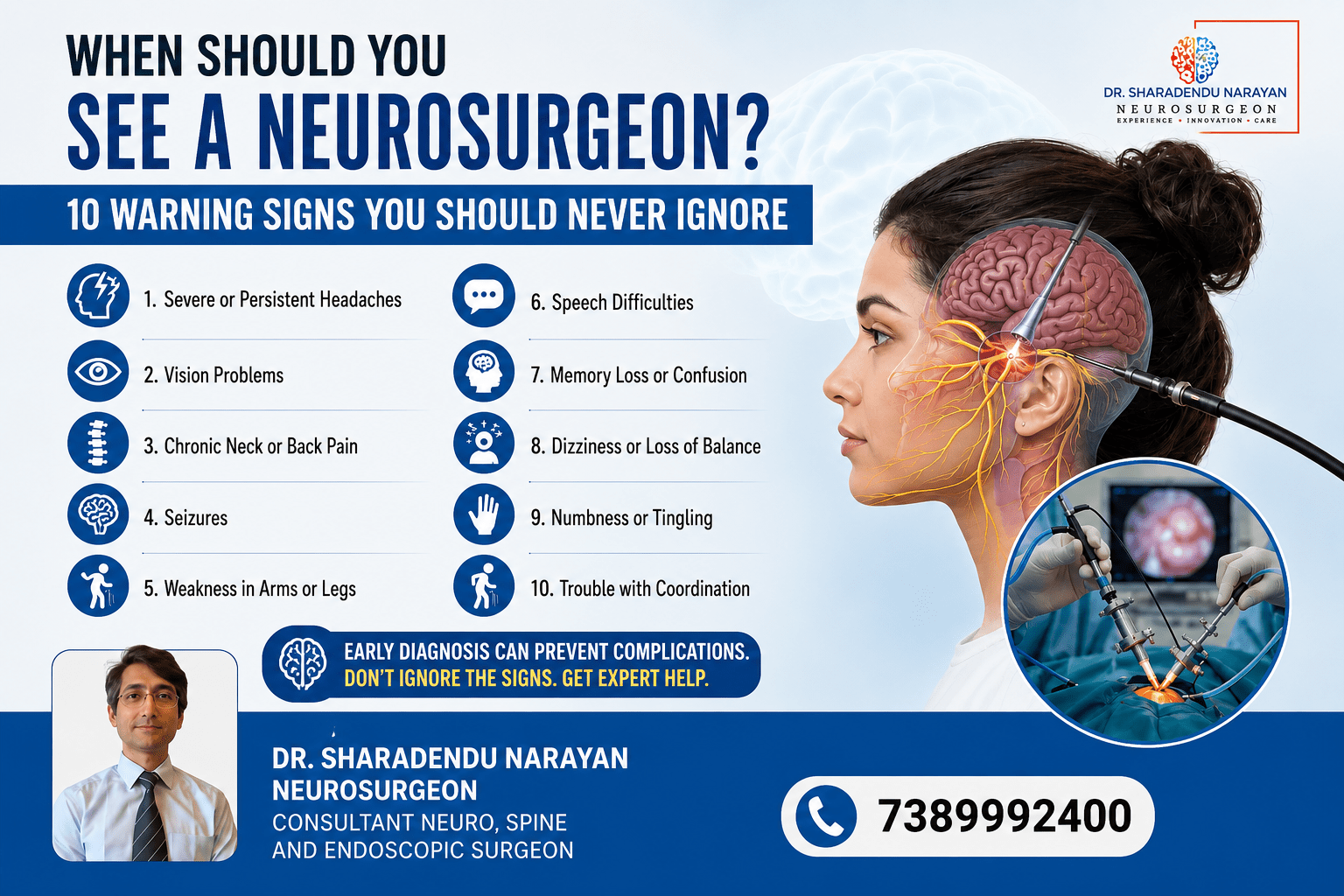
This is a question many people ask after experiencing persistent headaches, severe back pain, numbness in the arms or legs, neck pain, or weakness that does not improve with routine treatment. While many neurological symptoms may have simple causes, some can indicate conditions affecting the brain, spine, or nerves that require timely evaluation by a neurosurgeon.
Many people delay consulting a neurosurgeon because they assume surgery is the only treatment available. In reality, neurosurgeons are specialists who diagnose and manage a wide range of disorders involving the nervous system. Many neurological conditions can be treated successfully with medication, rehabilitation, minimally invasive procedures, or careful monitoring without requiring surgery.
Dr. Sharadendu Narayan is an experienced Consultant Neuro, Spine, and Endoscopic Surgeon in Jamshedpur with extensive training in brain and spine surgery. He provides comprehensive evaluation and personalized treatment for patients with neurological disorders, helping them receive timely diagnosis and appropriate care for conditions affecting the brain, spine, and peripheral nerves.
Best Neurosurgeon in Jamshedpur – Dr. Sharadendu Narayan
The brain, spinal cord, and nerves control almost every function of the human body. Any disorder affecting these structures can lead to pain, weakness, numbness, movement problems, balance issues, or changes in memory and speech. Early diagnosis often plays an important role in preventing complications and improving treatment outcomes.
Many neurological conditions develop gradually, while others appear suddenly and require immediate medical attention. Recognizing the warning signs and seeking expert care at the right time can make a significant difference.
Dr. Sharadendu Narayan provides evaluation and treatment for:
✔ Brain tumors
✔ Spine disorders
✔ Herniated (slipped) discs
✔ Sciatica
✔ Chronic neck pain
✔ Chronic back pain
✔ Spinal injuries
✔ Brain hemorrhage
✔ Stroke-related neurosurgical conditions
✔ Head injuries
✔ Hydrocephalus
✔ Peripheral nerve disorders
✔ Spine fractures
✔ Degenerative spine diseases
✔ Endoscopic spine surgery
His patient-centered approach focuses on identifying the underlying cause of neurological symptoms and recommending the most appropriate treatment for each individual.
Meet Dr. Sharadendu Narayan – Best Neurosurgeon in Jamshedpur
Dr. Sharadendu Narayan is a highly skilled Consultant Neuro, Spine, and Endoscopic Surgeon with advanced training in managing disorders affecting the brain, spine, and nervous system. His professional journey reflects years of dedication, specialized education, and experience at reputed medical institutions across India.
He began his medical career as a Senior Resident in General Surgery at Bharati Vidyapeeth Medical College, Pune, where he gained valuable surgical experience. He later pursued specialized training in Neurosurgery as a Registrar at Rajendra Institute of Medical Sciences (RIMS), Ranchi, strengthening his expertise in treating complex neurological and spinal conditions.
Before establishing his independent neurosurgical practice, Dr. Sharadendu Narayan served as a Specialist Neurosurgeon at Tata Main Hospital, Jamshedpur, where he managed a wide range of brain and spine disorders. His experience includes treating patients with traumatic brain injuries, spinal disorders, nerve compression syndromes, brain tumors, and various neurosurgical emergencies.
Today, he is recognized for providing comprehensive neurosurgical care with a focus on accurate diagnosis, evidence-based treatment, and patient-centered management. His expertise extends to brain surgery, spine surgery, minimally invasive spine procedures, and endoscopic neurosurgical techniques.
Why Choose Dr. Sharadendu Narayan?
Choosing the right neurosurgeon is an important decision because neurological conditions often require specialized evaluation and long-term management. Dr. Sharadendu Narayan combines clinical expertise with compassionate care to provide personalized treatment based on each patient’s diagnosis, lifestyle, and overall health.
Patients choose Dr. Sharadendu Narayan because of:
✔ Extensive experience in neurosurgery
✔ Specialized training in brain and spine surgery
✔ Expertise in endoscopic and minimally invasive spine surgery
✔ Advanced diagnostic approach
✔ Personalized treatment planning
✔ Focus on patient education
✔ Evidence-based medical care
✔ Comprehensive neurological evaluation
✔ Commitment to improving quality of life
His goal is to help patients regain mobility, reduce pain, and improve neurological function through timely diagnosis and appropriate treatment.
When Should You See a Neurosurgeon? 10 Warning Signs You Should Never Ignore
Neurological symptoms should never be ignored, especially when they persist, worsen over time, or interfere with daily life. Although not every symptom indicates a serious neurological condition, prompt medical evaluation is essential to determine the underlying cause.
Persistent or Severe Headaches
Frequent headaches that continue despite medication or are associated with vomiting, blurred vision, seizures, or weakness may require neurological evaluation. Persistent headaches can occasionally indicate increased pressure inside the brain or other neurological conditions.
Chronic Neck Pain
Neck pain lasting several weeks, especially when accompanied by numbness, tingling, or weakness in the arms, may result from nerve compression or cervical spine disorders.
Severe Back Pain
Persistent lower back pain that radiates into one or both legs may suggest spinal disc disease or nerve compression. Early diagnosis can help prevent permanent nerve injury.
Numbness or Tingling in the Arms or Legs
Loss of sensation, tingling, or burning sensations may indicate nerve damage, spinal cord compression, peripheral neuropathy, or other neurological disorders requiring specialist evaluation.
Weakness in the Arms or Legs
Progressive muscle weakness, difficulty lifting objects, climbing stairs, or walking should never be ignored. Weakness may result from spinal disorders, nerve injuries, or diseases affecting the brain.
Difficulty Walking or Loss of Balance
Frequent falls, dizziness, poor coordination, or problems maintaining balance may indicate disorders involving the brain, spinal cord, or inner nervous system and should be evaluated promptly.
Loss of Bladder or Bowel Control
Sudden difficulty controlling bladder or bowel function, especially when associated with severe back pain or leg weakness, may indicate a medical emergency such as spinal cord compression.
Seizures
A seizure occurring for the first time should always be evaluated by a neurologist or neurosurgeon to determine its underlying cause. Brain tumors, infections, head injuries, or structural abnormalities may require further investigation.
Head Injury with Persistent Symptoms
Head injuries followed by persistent headaches, repeated vomiting, confusion, unconsciousness, memory problems, or behavioral changes require immediate medical assessment to rule out serious brain injury.
Persistent Nerve Pain
Sharp, burning, shooting pain in the face, arms, hands, legs, or feet may result from nerve compression or nerve disorders. Timely diagnosis helps prevent worsening symptoms and improves treatment outcomes.
Why Early Diagnosis Matters
Ignoring neurological symptoms can sometimes allow an underlying condition to progress, making treatment more difficult. Early diagnosis helps identify the cause of symptoms, reduces the risk of complications, and improves the chances of successful recovery.
Seeking timely medical evaluation can help:
✔ Prevent permanent nerve damage
✔ Improve treatment outcomes
✔ Reduce pain and disability
✔ Restore mobility and function
✔ Identify serious neurological conditions early
✔ Improve overall quality of life
Prompt consultation with an experienced neurosurgeon ensures that patients receive appropriate investigations and individualized treatment based on their specific condition.
Common Causes of Neurological Disorders
Neurological conditions affecting the brain, spine, and nerves can develop due to various medical conditions, injuries, infections, or age-related changes. While some neurological disorders occur suddenly, others develop gradually over time and may initially cause mild symptoms that become more severe if left untreated.
Common causes include:
✔ Age-related degeneration of the spine
✔ Herniated (slipped) spinal discs
✔ Spinal canal narrowing (Spinal Stenosis)
✔ Brain tumors
✔ Head injuries
✔ Road traffic accidents
✔ Stroke
✔ Brain hemorrhage
✔ Congenital abnormalities
✔ Nerve compression
✔ Spinal infections
✔ Osteoporosis-related spine fractures
✔ Sports injuries
✔ Genetic neurological disorders
✔ Degenerative diseases affecting the brain and spine
Understanding the underlying cause is essential because every neurological condition requires a different treatment approach.
Risk Factors for Brain and Spine Disorders
Although neurological disorders can affect people of any age, certain factors increase the likelihood of developing conditions involving the brain, spine, or peripheral nerves.
Common risk factors include:
✔ Increasing age
✔ Diabetes
✔ High blood pressure
✔ Obesity
✔ Smoking
✔ Sedentary lifestyle
✔ Previous spinal injury
✔ Family history of neurological disorders
✔ Heavy physical work
✔ Poor posture
✔ Repetitive strain injuries
✔ Osteoporosis
✔ High cholesterol
✔ Previous brain injury
Identifying these risk factors allows early intervention and helps reduce the chances of long-term neurological complications.
How Brain and Spine Disorders Affect Daily Life
Neurological disorders can affect much more than physical movement. Since the brain and spinal cord control nearly every function of the body, untreated neurological problems may gradually interfere with daily activities, work performance, independence, and emotional well-being.
Patients may experience:
✔ Difficulty walking
✔ Persistent pain
✔ Reduced mobility
✔ Weakness in the arms or legs
✔ Difficulty driving
✔ Sleep disturbances
✔ Difficulty concentrating
✔ Problems performing daily activities
✔ Anxiety due to chronic pain
✔ Reduced work productivity
✔ Loss of independence
✔ Emotional stress
The impact varies depending on the condition, but timely diagnosis often helps prevent progression and improves long-term quality of life.
When Should Neurological Symptoms Be Considered an Emergency?
Certain neurological symptoms require immediate medical attention because delaying treatment may increase the risk of permanent brain or spinal cord damage.
Seek emergency medical care if you experience:
✔ Sudden weakness on one side of the body
✔ Sudden loss of speech
✔ Sudden vision loss
✔ Loss of consciousness
✔ Severe head injury
✔ Repeated vomiting after head trauma
✔ Sudden seizures
✔ Sudden inability to walk
✔ Loss of bladder or bowel control associated with severe back pain
✔ Sudden confusion
✔ Severe neck stiffness with fever
These symptoms should never be ignored and require urgent evaluation.
How Does a Neurosurgeon Diagnose Neurological Disorders?
A neurosurgeon begins by understanding the patient’s symptoms, medical history, and overall neurological health. A detailed neurological examination helps determine whether the problem originates from the brain, spinal cord, or peripheral nerves.
Depending on the symptoms, Dr. Sharadendu Narayan may recommend:
✔ Comprehensive neurological examination
✔ Muscle strength assessment
✔ Sensory testing
✔ Reflex examination
✔ Balance and coordination assessment
✔ Cranial nerve examination
✔ MRI Scan
✔ CT Scan
✔ X-ray of the spine
✔ Nerve Conduction Study (NCS)
✔ Electromyography (EMG)
✔ Blood investigations when required
✔ Additional neurological imaging based on clinical findings
Accurate diagnosis is the foundation of effective treatment, allowing the most appropriate management plan to be developed for each patient.
Treatment Options Offered by Dr. Sharadendu Narayan
Treatment depends on the patient’s diagnosis, age, severity of symptoms, and overall health. Not every neurological condition requires surgery. Many patients recover successfully through conservative treatment, while others may benefit from advanced minimally invasive procedures.
Conservative (Non-Surgical) Management
Many neurological disorders improve with non-surgical treatment, particularly when diagnosed early.
Treatment may include:
✔ Medications
✔ Physiotherapy
✔ Lifestyle modifications
✔ Pain management
✔ Activity modification
✔ Cervical or lumbar rehabilitation
✔ Regular follow-up and monitoring
Minimally Invasive Spine Surgery
For selected patients, minimally invasive spine surgery offers effective treatment with smaller incisions and faster recovery.
Benefits may include:
✔ Smaller surgical cuts
✔ Reduced blood loss
✔ Less postoperative pain
✔ Faster recovery
✔ Shorter hospital stay
✔ Earlier return to normal activities
Endoscopic Spine Surgery
Dr. Sharadendu Narayan specializes in advanced endoscopic spine surgery for suitable patients with spinal disorders.
Potential advantages include:
✔ Tiny incision
✔ Minimal tissue damage
✔ Faster rehabilitation
✔ Reduced postoperative discomfort
✔ Improved cosmetic outcome
Every patient is carefully evaluated to determine whether endoscopic surgery is the appropriate treatment option.
Brain Surgery
Certain neurological conditions involving the brain may require surgical management.
Brain surgery may be recommended for:
✔ Brain tumors
✔ Brain hemorrhage
✔ Hydrocephalus
✔ Certain traumatic brain injuries
✔ Selected vascular abnormalities
The surgical approach depends entirely on the diagnosis and individual patient condition.
Spine Surgery
Spine surgery may be advised when conservative treatment fails or when nerve compression causes progressive weakness, severe pain, or loss of function.
Conditions that may require surgery include:
✔ Herniated discs
✔ Spinal stenosis
✔ Spinal instability
✔ Spine fractures
✔ Nerve compression syndromes
✔ Degenerative spinal disorders
The treatment plan is always individualized after detailed evaluation.
Benefits of Early Consultation with a Neurosurgeon
Many neurological conditions respond better to treatment when diagnosed early. Seeking medical advice before symptoms become severe can help preserve neurological function and improve recovery.
Early consultation may help:
✔ Prevent permanent nerve damage
✔ Reduce pain
✔ Preserve mobility
✔ Improve muscle strength
✔ Prevent worsening neurological deficits
✔ Improve quality of life
✔ Allow minimally invasive treatment options when appropriate
✔ Reduce recovery time
Early intervention often leads to better long-term outcomes and helps patients return to their daily activities sooner.
Why Choose Dr. Sharadendu Narayan?
Patients choose Dr. Sharadendu Narayan because of his dedication to providing comprehensive, evidence-based neurosurgical care with a patient-focused approach.
Key reasons include:
✔ Specialized expertise in Brain and Spine Surgery
✔ Consultant Neuro, Spine & Endoscopic Surgeon
✔ Advanced training from reputed medical institutions
✔ Experience at Tata Main Hospital, Jamshedpur
✔ Expertise in minimally invasive spine surgery
✔ Personalized treatment planning
✔ Comprehensive neurological evaluation
✔ Compassionate patient care
✔ Focus on long-term neurological recovery
Currently Serving Patients Across Jamshedpur
Dr. Sharadendu Narayan provides specialized neurosurgical care for patients from Jamshedpur and surrounding regions who are experiencing disorders affecting the brain, spine, and nervous system. His comprehensive approach focuses on accurate diagnosis, personalized treatment planning, and long-term neurological recovery.
He offers evaluation and treatment for:
✔ Brain Tumors
✔ Spine Disorders
✔ Herniated (Slipped) Disc
✔ Sciatica
✔ Cervical Spondylosis
✔ Chronic Neck Pain
✔ Chronic Back Pain
✔ Brain Hemorrhage
✔ Head Injury
✔ Stroke-related Neurosurgical Conditions
✔ Spinal Cord Compression
✔ Peripheral Nerve Disorders
✔ Trigeminal Neuralgia
✔ Hydrocephalus
✔ Spine Fractures
✔ Degenerative Spine Diseases
✔ Endoscopic Spine Surgery
✔ Minimally Invasive Spine Surgery
Patients from Jamshedpur and nearby areas seek his expertise for advanced brain and spine care with the goal of improving mobility, reducing pain, and restoring neurological function.
Long-Term Brain and Spine Health
Protecting your brain and spine is essential for maintaining overall health, mobility, and independence. While some neurological disorders cannot be prevented, adopting healthy habits and seeking timely medical care can reduce the risk of complications.
Healthy practices include:
✔ Maintaining good posture
✔ Exercising regularly
✔ Managing diabetes and blood pressure
✔ Avoiding smoking
These preventive measures contribute to better long-term neurological health and improve overall quality of life.
Common Myths About Neurosurgery
Many people hesitate to consult a neurosurgeon because of common misconceptions. Understanding the facts helps patients make informed decisions about their neurological health.
Myth 1: Every Neurosurgeon Only Performs Surgery
Fact: Neurosurgeons diagnose and treat many neurological conditions, and many patients improve with medications, rehabilitation, or observation without surgery.
Myth 2: Back Pain Always Requires Surgery
Fact: Most cases of back pain are managed successfully with conservative treatment. Surgery is recommended only for selected patients after careful evaluation.
Myth 3: Brain Surgery is Always Extremely Risky
Fact: Modern neurosurgical techniques, advanced imaging, and minimally invasive procedures have significantly improved the safety and precision of many brain surgeries.
Myth 4: Neurological Symptoms Will Improve on Their Own
Fact: Persistent headaches, weakness, numbness, balance problems, or severe back pain should never be ignored. Early diagnosis often leads to better treatment outcomes.
Myth 5: Neurosurgery is Only for Elderly Patients
Fact: Brain and spine disorders can affect people of all ages, including children, young adults, athletes, and older individuals.
Summary
Knowing When Should You See a Neurosurgeon? 10 Warning Signs You Should Never Ignore can help you recognize symptoms that require expert evaluation. Persistent headaches, chronic neck or back pain, numbness, weakness, difficulty walking, seizures, head injuries, balance problems, and loss of bladder or bowel control are warning signs that should not be overlooked. While not every neurological symptom requires surgery, timely diagnosis is essential for identifying the underlying cause and preventing further complications.
Dr. Sharadendu Narayan, an experienced Consultant Neuro, Spine, and Endoscopic Surgeon in Jamshedpur, provides comprehensive evaluation and personalized treatment for disorders affecting the brain, spine, and nerves. Through advanced diagnostic techniques, minimally invasive procedures, and evidence-based care, he helps patients regain mobility, relieve pain, and improve their quality of life.
FAQs – Best Neurosurgeon in Jamshedpur
1. What symptoms indicate that I should see a neurosurgeon?
Persistent headaches, chronic neck or back pain, numbness, tingling, muscle weakness, balance problems, seizures, head injuries, or loss of bladder and bowel control should be evaluated by a neurosurgeon.
2. Does visiting a neurosurgeon always mean I need surgery?
No. Many neurological and spine conditions can be managed successfully with medications, physiotherapy, rehabilitation, lifestyle modifications, or regular monitoring. Surgery is recommended only when necessary.
3. Can a neurosurgeon treat slipped disc problems?
Yes. Neurosurgeons diagnose and manage herniated (slipped) discs using both conservative treatments and surgical procedures when required.
4. When should chronic back pain be evaluated?
Back pain lasting more than a few weeks, pain radiating to the legs, numbness, weakness, or difficulty walking should be assessed by a specialist to determine the underlying cause.
5. What conditions does a neurosurgeon commonly treat?
Neurosurgeons treat brain tumors, spinal disorders, slipped discs, nerve compression, brain hemorrhage, hydrocephalus, spinal injuries, peripheral nerve disorders, head injuries, and various conditions affecting the brain, spine, and nervous system.
6. Is minimally invasive spine surgery available?
Yes. Depending on the diagnosis, some patients may be suitable candidates for minimally invasive or endoscopic spine surgery, which generally involves smaller incisions and a faster recovery.
7. Can neurological disorders be prevented?
Not all neurological conditions can be prevented, but maintaining a healthy lifestyle, controlling chronic diseases, avoiding smoking, practicing good posture, and seeking early medical care for symptoms can help reduce certain risks.
8. Who should I consult for brain and spine disorders in Jamshedpur?
Dr. Sharadendu Narayan is an experienced Consultant Neuro, Spine, and Endoscopic Surgeon in Jamshedpur who provides comprehensive evaluation, diagnosis, and treatment for a wide range of neurological and spinal conditions.
Conclusion – Best Neurosurgeon in Jamshedpur
Recognizing when you should see a neurosurgeon is essential for protecting your brain, spine, and nervous system. Symptoms such as persistent headaches, severe back or neck pain, numbness, weakness, balance problems, seizures, and head injuries should never be ignored, as they may indicate underlying neurological conditions requiring timely evaluation. Early diagnosis not only helps prevent complications but also increases the chances of successful treatment and recovery.
Dr. Sharadendu Narayan provides advanced neurosurgical care in Jamshedpur with a focus on accurate diagnosis, personalized treatment, minimally invasive techniques, and long-term neurological health.